


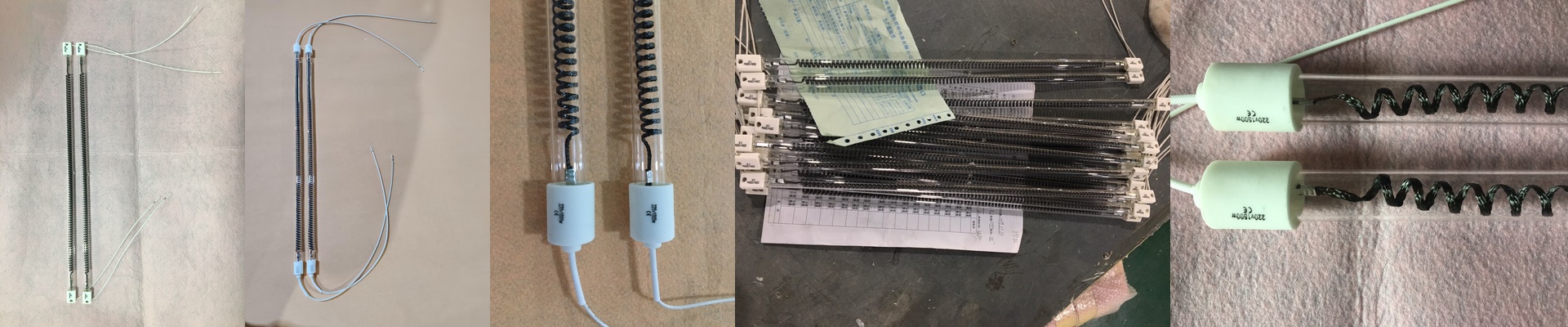

Carbon Fiber Heat Lamps: Built for One Thing—Fast, Controlled Drying
We built these carbon fiber shortwave heat lamps for a single reason: to get industrial drying done quickly, and on your terms. When you’re trying to pull moisture out of coatings, composites, or plastic preforms, you need a heat source that turns on hard, stays steady, and slips into tight equipment spaces without a fight.
Power, Voltage, and Size: What You Actually Get
These lamps are all about shortwave infrared—near-instant heat with serious power density. A common setup runs at 400V and 2500W, packing a lot of punch into a compact tube. At just 300mm long, the heat stays concentrated. That means you can aim the energy exactly where you need it—one specific line, a small curing zone, a focused drying window—without turning your whole plant into a sauna. That high voltage and wattage aren’t an accident. They give you intense heat per inch of tube. But it also means the power supply, wiring, and thermal setup have to be right-sized from the start. If your machine already runs 400V, you’re in luck—clean match, no fuss. If it doesn’t, you’ll want to plan the transformer and control wiring before you bolt anything in place.
Why Carbon Fiber, Quartz, and the R7s Base
The carbon fiber filament is the heart of it. It handles rapid heat-up and cool-down cycles way better than standard wire elements. It gets hot fast, avoids hot spots, and keeps output consistent over thousands of cycles. The quartz envelope? It handles the extreme internal temperatures and keeps the filament in a stable environment, shift after shift. And the reflective coating on the tube does something simple but huge: it catches wasted backward radiation and throws it forward. On the factory floor, that translates to hitting your target temperature faster—and holding it with less fiddling. The R7s base is just practical. It gives you a secure, two-contact connection that’s common across heater lines, so replacement during maintenance is a straightforward swap, not a redesign.
Real-World Drying: Less Waiting, More Running
When you’re drying, speed isn’t a buzzword—it’s cycle time and stable temperature. These lamps sprint to temperature, so you can get the surface to where it needs to be, quickly, then keep it there with predictable control. The focused footprint is a big plus when you’re retrofitting an existing line. Less rework. Less downtime. Here’s the part you can’t ignore: high power density needs proper cooling and solid electrical design. Get the airflow and wiring planned up front, and what you end up with is a drying system that runs hard, repeats reliably, and stays in production.