

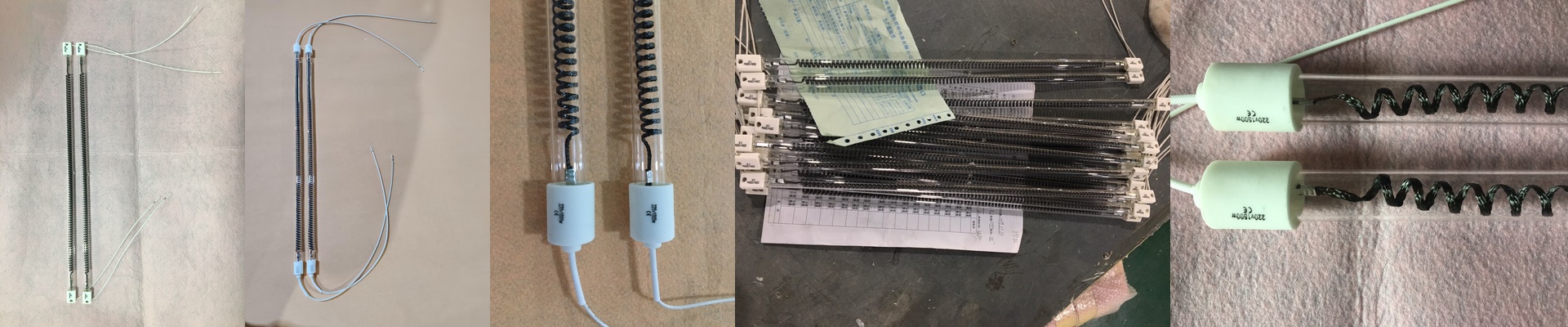


Let’s Talk About Ruby Carbon Fiber IR Lamps
We built these lamps to hit that sweet spot right between your basic halogen tubes and those pricey ceramic heaters. The secret is in the build: a carbon fiber filament wrapped in ruby-doped quartz glass. That ruby isn’t just for looks—it actually tweaks the light, pushing the heat into a shorter wavelength. In plain English? It sinks into your materials way faster than the slow-burn radiation you’re used to. The nitty-gritty on the heat These things are powerhouses. Because we went with carbon fiber instead of tungsten, you don’t have to worry nearly as much about the filament snapping when you’re cranking the heat up and down. The ruby quartz is tough, too. It can handle those wild temperature swings without just cracking under the pressure. One quick tip:**get your voltage and wattage exactly right.**If your transformer is too weak, you’ll end up with “cold spots” across your workpiece, and that’s a headache nobody wants. Getting them into your setup The ruby coating does the heavy lifting by filtering the light to make sure the heat actually transfers to your part, not just the air. We use industry-standard connectors, so you can usually just swap them into your existing IR arrays without a fight. Plus, since it’s carbon fiber, the ramp-up is nearly instant. You flip the switch, and you’ve got heat. Right now. Real talk: The shop floor Here is the thing: these lamps put out a massive amount of energy. It’s intense. Because they’re so efficient at pushing heat, the housing around the lamp really takes a beating. You’ve got to make sure your fans and vents are actually doing their job. If you cram these into a tight space without any airflow, you’re going to melt your sockets or fry your seals. And do yourself a favor—check your electrical contacts every 500 hours. A little bit of oxidation can creep in, increase the resistance, and mess with your performance. It takes two minutes to check, and it saves you a lot of grief later.