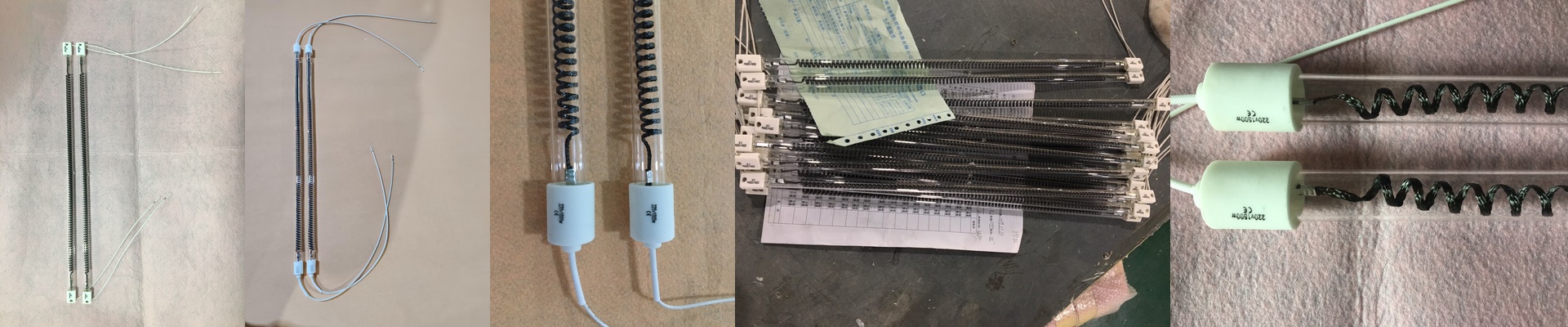


Carbon Heater Lamps: The Muscle Behind Industrial Infrared Heat
We make carbon heater lamps for one simple reason: to give you heat that hits hard, right where you need it. Forget your average household bulb. This is industrial-grade muscle, built for processes that demand serious heat. At the heart of it all is a shortwave infrared emitter. It’s all about delivering a blast of focused energy that’s fast and furious. This is the kind of heat you reach for when the job calls for power—and you need it right now. No waiting around.
Getting Into the Details: Power, Voltage, and Fit
Let’s talk specs. They’re not just numbers on a page; they’re dictated by physics and what your equipment can handle. A typical unit packs a punch at 2500W or 3000W. That’s a serious amount of thermal output. Then there’s the voltage. We often use 400V because it lines up perfectly with industrial power supplies. That means you can plug it right in, no extra transformers needed on your standard three-phase systems. And the physical size? Critical. We’re talking lengths like 300mm or 500mm. That dimension decides your heated area. Get it wrong, and your heat profile is off. You’ll end up with cold spots or wasted energy. The fit has to be perfect.
The Inside Story: A Tough, Simple Design
The build is straightforward, but it’s built to last. It all starts with a high-purity quartz tube that holds the carbon filament. This quartz isn’t just for strength; it lets the shortwave infrared energy blast through with almost no loss. Inside, a halogen gas fill does a clever trick. It creates a self-cleaning cycle that stops the filament from burning out too soon. It keeps everything running clean, which means a longer life and steady, reliable output for thousands of hours. And the connection? We use the standard R7s connector. It’s a two-ended, rock-solid electrical connection that handles the high current and high temperatures without a hitch. No arcing. No failures.
Built for the Workshop Floor: Real-World Solutions
These lamps live on the shop floor, tackling jobs like PET blowing, plastic welding, and thermoforming. The shortwave heat doesn’t just sit on the surface; it gets right inside the plastic, heating it from the core out. The result? Faster cycle times and way better control over your material. And because the heat is so dense, you can shrink the heating zone. That saves space on your machine. Now, there’s one thing to keep in mind. All that power generates a lot of heat. So you’ve got to make sure your surrounding machinery and cooling systems are ready for the temperature rise. For us, it’s simple. We’re building a replacement that you can drop in, forget about, and trust to take a beating. It just keeps your process running. No fuss, no drama. Just dependable heat, day after day.