




Getting Your Brake Pad Heating Right: No More Fluctuations
If you’re running a brake pad line 24/7, you know that “just getting it hot” isn’t enough. You need that heat to stay exactly where it is. When your infrared modules start drifting, everything goes sideways. Your curing process misses the mark, the friction material density gets wonky, and suddenly you’re staring at a pile of rejected batches. It’s a nightmare.
Stopping the Power Dip
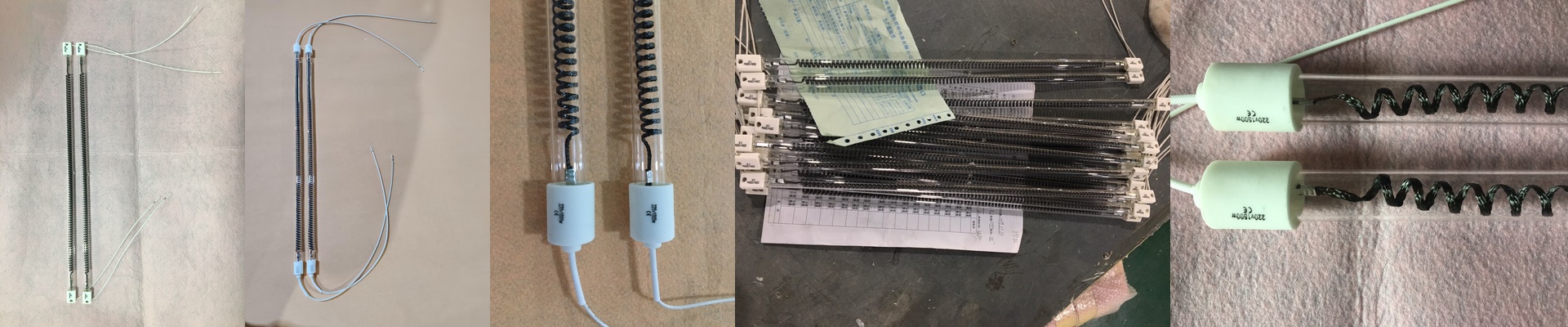
The real battle is won in the gap between the heating element and the power supply. Most standard lamps just can’t handle the grind. They cycle or wear down, leaving “cold spots” in your production flow. To stop that, we use high-grade quartz envelopes and filaments wound with actual precision. It keeps the electrical resistance steady, so the heat doesn’t wander. But the hardware is only half the story. If your input voltage is jumping around, your heat will too. That’s why we suggest pairing these modules with PID controllers and SCR power regulators. Think of it as a thermostat on steroids. It watches the factory floor—where temperatures shift constantly—and tweaks the power in real-time to keep things locked in.
Built for the Grime
Let’s be honest: brake pad lines are filthy. You’ve got dust and metallic bits flying everywhere. That grit loves to get into your connections and cause oxidation. Once that happens, your voltage drops, your heating gets erratic, and you’re back to square one. We use sealed connectors to keep the gunk out. These modules are built to take a beating. Constant vibration, heat cycling, the works. They just keep humming.
The Catch (And How to Handle It)
Here’s the thing: pushing out this much high-density infrared heat puts a massive strain on your electrics. It’s great for 24-hour runs, but it throws off a lot of waste heat. You can’t just ignore the cooling. If your cabinet ventilation isn’t up to the task, your controllers will trip and your “continuous” run becomes a “stopped” run. One last tip? Use high-temperature shielded cabling. It keeps the electrical noise from messing with your automation sensors. Simple, but it saves you a massive headache down the road.