


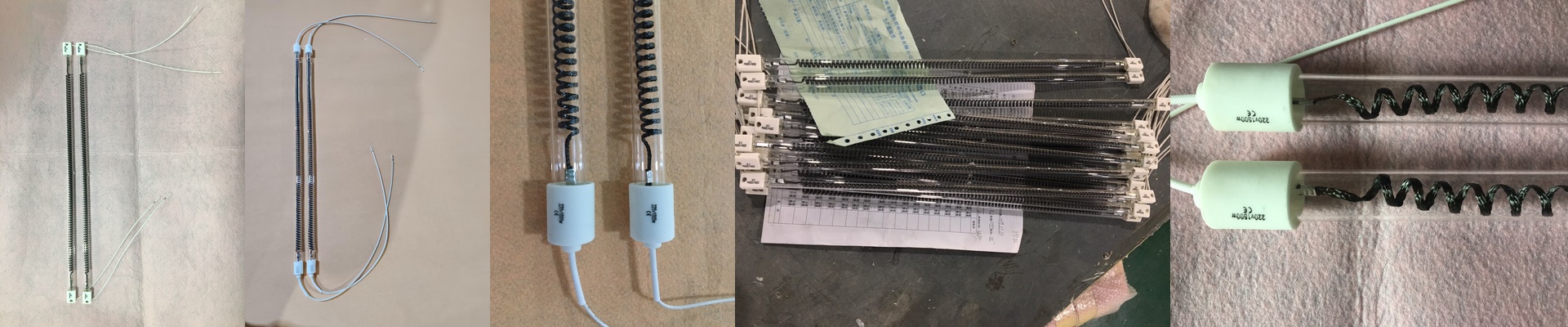


Let’s talk about the 220V 1000W Carbon Infrared Quartz Lamp
We built these 12mm quartz lamps for the heavy lifting. If you’re dealing with high-intensity heat, this is what you want. We’ve tucked a carbon heating element inside a high-purity quartz shell, running it at 220V to push out a solid 1000W of power. The size and the punch The 12mm tube is a classic size. It’s great because you can crowd a few of them into a tight space without turning your housing into an oven. Since it hits 1000W, it doesn’t mess around. It ramps up to temperature almost instantly. If you’re already running a medium-wave infrared system, you can usually just swap these in and go. Why carbon? Here’s the thing: we went with carbon filaments instead of the usual tungsten or halogen wires. Carbon puts out a broader spectrum of infrared. In plain English? The heat actually gets deeper into your materials. To keep that filament from burning out, the quartz glass protects it from oxygen and handles the intense pressure that comes with 1000W. One quick tip: check your wiring. Make sure your cables can handle the current. If they’re too thin, you’ll get voltage drops, and your lamp just won’t hit its full potential. Where this actually helps These are the workhorses for drying, curing, and PET blowing. When you’re working with plastics, carbon IR is a lifesaver because it doesn’t scorch the surface like those short-wave lamps do. But a word of caution. 1000W in a tiny 12mm tube getshot. You’ll want a polished aluminum or gold-plated reflector to bounce that energy back where it belongs. If your reflectors are dirty or pitted, you’re basically throwing away 20% of your heat. Also, double-check your mounting clips. If they’re too tight, the quartz won’t have room to breathe as it expands, and that’s how you end up with a cracked lamp.