


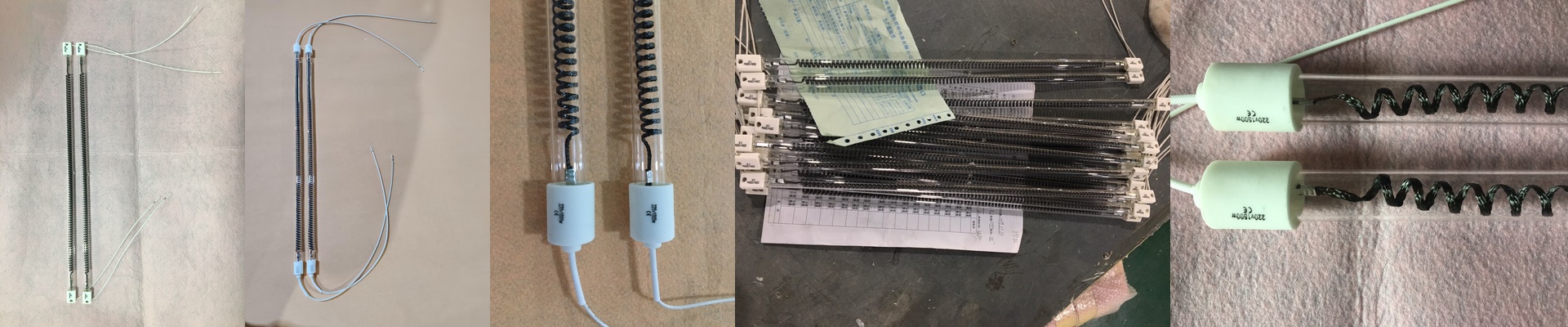

Let’s Talk Quartz Carbon Infrared Lamps
If you’re looking for a way to get things hot—and get them hot fast—without just scorching the surface of your material, these lamps are your best bet. We use a carbon filament tucked inside a high-purity quartz tube. It’s designed to push medium-to-long wave radiation deep into whatever you’re heating, rather than just baking the outside. The nitty-gritty on power Here is the thing about voltage and wattage: it’s all a balancing act. When we set a lamp at 230V or 400V, we’re basically trying to find the sweet spot where the filament hits the right temperature without blowing a fuse. High-wattage tubes move a massive amount of heat. But you’ve got to make sure your wiring can actually handle that load. If your voltage starts dipping, you’ll end up with “cold spots” on your line, and nobody wants to deal with inconsistent batches. What’s under the hood? We go with quartz for a simple reason: it doesn’t get in the way. It lets the infrared heat pass right through. The carbon filament is the real workhorse here; it can take a beating and handle much higher temperatures than your average metal wire before it finally gives out. For the connections, we usually stick with R7s or Sk15. Why? Because they just fit. You can swap them into most industrial housings without a headache, which makes maintenance a lot less painful. Plus, if you’re working in a messy environment, we can add a special coating to protect the glass from chemical splashes or tweak how the heat is emitted. Real-world use (and the catch) You’ll see these all over the place in PET blowing and automotive drying. They’re great because they don’t take up nearly as much space as those giant convection ovens. Since the heat goes directly to the part, you aren’t wasting energy heating up the entire room. But there is a trade-off. Because these lamps are so intense, the quartz is fragile. One clumsy move during installation or a missing shield, and you’ve got a broken tube. You’ll want to make sure your mounting brackets are spot on. If there’s too much tension on the glass, it’s going to snap. Keep it precise, and you’re golden.