


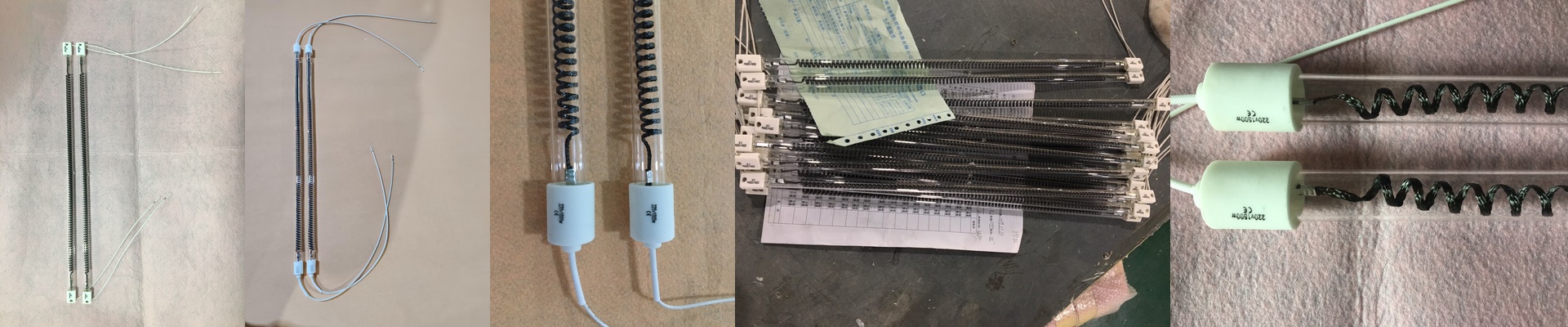


Let’s Talk Carbon Fiber Heating
Ever wonder why some heaters take forever to warm up while others hit you with heat the second you flip the switch? That’s where carbon fiber lamps come in. Instead of those old-school metal coils, we use a carbon filament tucked inside a quartz tube. The magic here is that it doesn’t need to get scorching hot itself to push out a ton of infrared energy. It’s fast. Really fast. And if you need your equipment to ramp up to temperature in a heartbeat, this is the way to go. The Trade-off: Power vs. Life Here’s the thing about wattage. It’s all a balancing act. If you crank up the wattage relative to the length of the lamp, you get an immediate blast of heat. It’s great for shocking a workpiece into shape. But you’ve got to make sure your power supply can handle that initial surge, or you’re going to have a bad time. Also, a quick heads-up: if you run these at the absolute limit of their voltage, they’ll hit that target temp faster, but the lamp won’t last as long. It’s a classic “speed vs. longevity” situation. The Nitty-Gritty Stuff We use high-purity quartz glass because it lets the IR rays pass through without getting blocked. Depending on what you’re doing, we can even add a coating to tweak the heat spectrum or keep dust and grime from ruining the filament. As for plugging them in, we stick to the basics—R7s or Sk15 connectors. They’re designed to be drop-in replacements for most OEM setups. They fit tight, which means no annoying arcing or sparking, even if your machinery vibrates like crazy. Putting Them to Work You’ll see these all over the place—blowing PET bottles, curing paint, or welding plastics. The best part? You aren’t wasting energy heating up all the air in the room like a convection oven does. The heat goes straight to the material. Just be careful. Because the heat is so concentrated, it’s easy to create hotspots. You’ll want to play around with the distance and timing so you don’t accidentally burn through your project. And don’t forget to check your cooling system; those lamp housings still put off some ambient heat that needs to go somewhere.