




Getting the Heat Right: Curing Ceramic vs. Semi-Metallic Brake Pads
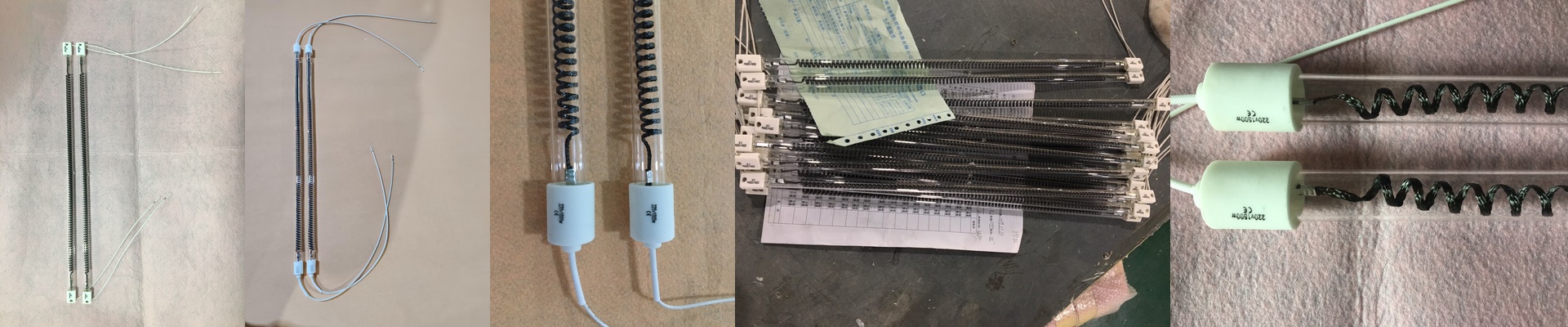
If you’ve ever scorched a batch of friction material, you know the frustration. It’s a balancing act. You need enough heat to cure the resins, but if you overdo it, you’re just burning your product. The secret isn’t just “more heat”—it’s about the wavelength. Here’s the thing: a ceramic pad and a semi-metallic pad are completely different animals. They don’t “drink” infrared light the same way. If you try to use the same lamp for both, you’re going to have a bad time. Usually, the heat just sits on the surface. You end up with a charred exterior and a core that’s still raw. Not great. That’s why we tune the spectral output of our elements to actually get inside the material. For those dense ceramic blends, we lean on short-wave IR to push the heat deep into the matrix. Semi-metallics are trickier. Those metal particles love to create tiny, intense hot spots that can crack the pad right down the middle. We balance the output to stop that from happening. But it’s not just about the physics of light; it’s about the gear holding it all together. Production lines are brutal. They run hot and they run fast. If you use cheap quartz or skimp on the filament density, your lamps are going to burn out way too soon. We use high-wattage density to keep your throughput moving, but that puts a ton of pressure on the lamp ends. To fix that, we use reinforced seals. No gas leaks, no surprises. Now, there is a trade-off. Sure, cranking up the power density makes your cycle faster. But it also makes things volatile. If your conveyor isn’t moving at a rock-steady pace, you’re risking thermal shock. And guess what? If that belt jams for even a few seconds, those pads will overheat instantly. It’s a nightmare. Your control system has to be wired to kill the power the second the line stops. It’s the only way to save your parts—and your lamps—from a total meltdown.