

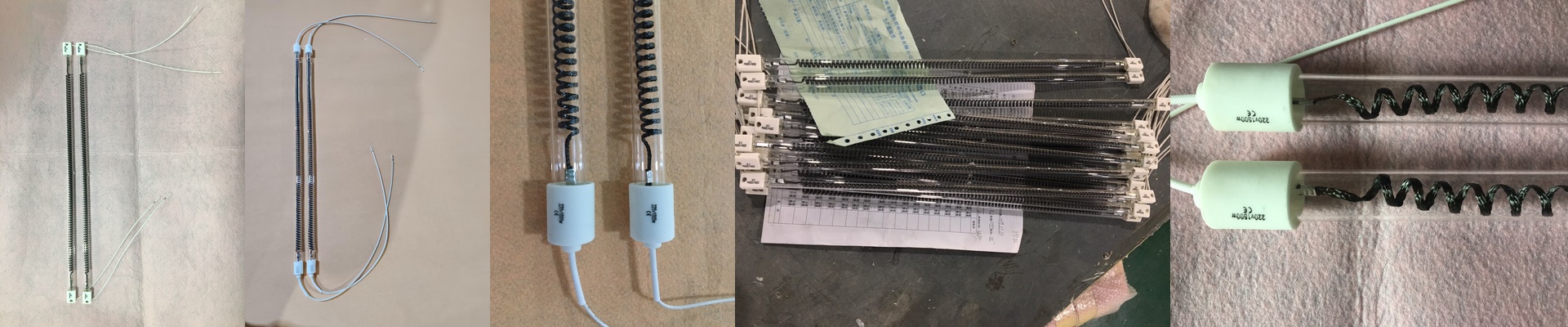


Getting the Heat Right for Brake Lining Curing
Here’s the thing about brake linings: they aren’t all the same. A ceramic pad doesn’t “drink” infrared energy the same way a semi-metallic one does. If you try to use the same lamp for both, you’re asking for trouble. You’ll either end up with a core that’s barely cured or a surface that’s completely scorched. That’s why we don’t do “one size fits all.” We build our lamps to match how each specific material actually absorbs heat. The battle against “skinning” Ceramic materials are picky. They need a different kind of light than metallic composites. We use short-wave and medium-wave quartz lamps because they actually punch through the material. Without that penetration, you get “skinning.” It’s a nightmare—the outside looks perfect and hard, but the inside is still wet. To stop that, we tweak the tungsten filament density and the thickness of the quartz. It sounds technical, but it’s really just about shifting the heat to where the material can actually use it. Power and the “hidden” risks High-wattage lamps are great because they speed everything up. We push for high heat density so you don’t need a massive oven taking up half your shop floor. But watch your wiring. If you’re running a huge array of lamps, those voltage drops are real. And keep an eye on your power supply—the initial surge of current when you flip the switch can trip your breakers if you aren’t prepared for it. The heat trade-off There is a catch, though. High-output lamps put a lot of stress on your gear. A short-wave tube cuts your curing time way down, but it throws a massive amount of heat toward the oven walls. If you don’t get your cooling fans and insulation right, your oven shell could warp. Worse, you might fry your control electronics. It’s a balancing act. Keeping it simple to install We use standard industrial connectors so these are just drop-in replacements. You shouldn’t have to rip out your wiring every time you switch from semi-metallic to ceramic profiles. Just swap the lamps, tweak your timer, and you’re back in business. One last tip:**use high-temp wiring.**Don’t try to save a few bucks with cheap cables. In a curing oven, they’ll melt and short out in a week. Not worth the headache.