



Getting the Heat Right for Your Brake Pads
Here’s the thing: not all brake pads are created equal. If you try to treat a ceramic pad the same way you treat a semi-metallic one, you’re going to have a bad time. Most people just throw a generic IR heater at the problem. But that’s how you end up with a “skinned” part—where the outside looks perfect, but the core is still wet and uncured. Or worse, you scorch the surface before the heat even hits the middle. To fix this, we don’t just “heat” the material. We match the wavelength of the emitter to the actual chemistry of the friction compound.
It’s All About How the Material “Drinks” the Heat
Semi-metallics have steel wool or copper in them. They move heat fast, but they can be stubborn and reflect certain IR waves right back at you. Ceramics are a different story. They act more like insulators. To get the resin to cure all the way through, you need heat that can actually penetrate the thickness of the pad. That’s why we’re picky about the lamps. Short-wave IR is great when you need a fast, intense hit on the surface. But for those organic binders? You need medium-wave IR to get deep inside. If you pick the wrong one, you’re basically just burning electricity and praying the parts don’t get rejected.
Managing the Power
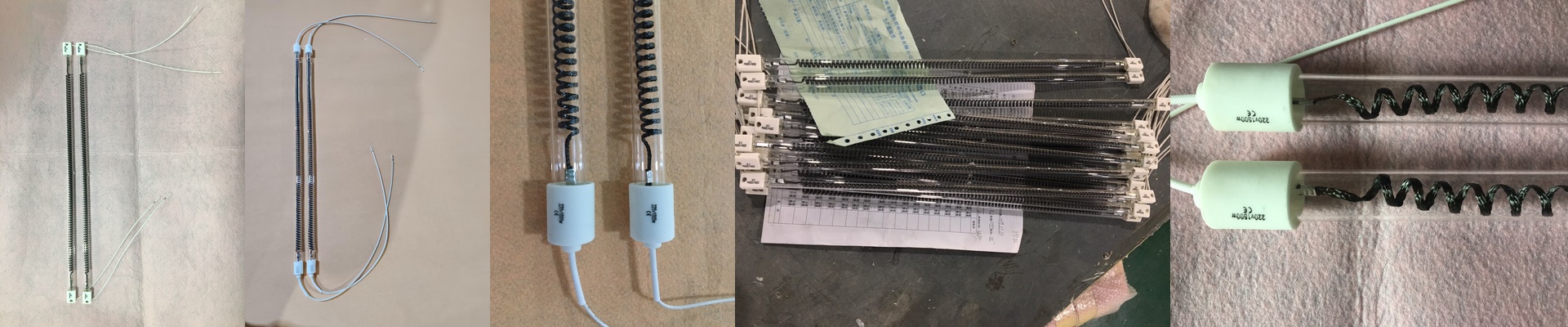
Once we know the wave, we look at watt density. We use high-intensity quartz tubes because they pack a lot of punch into a tiny footprint. You can even set these up in zones, which is a lifesaver for fixing those annoying temperature drops you get at the edges of a conveyor. But a word of warning: high wattage is great for throughput, but it creates a lot of heat soak. If your cooling fans aren’t up to the task, you’ll start smelling burnt wiring or, even worse, you’ll warp your oven housing. It’s a balancing act.
Picking the Right Setup
We’ve never been fans of the “one-size-fits-all” approach. It just doesn’t work. Your choice of emitter should depend entirely on your cycle time and what materials you’re running. We use a pretty straightforward scientific process to make sure the lamp’s peak emission hits the material’s absorption peak perfectly. It takes the guesswork out of the process. No more guessing if the center is cured. No more scrapped parts. Just a process that actually works.