



Stop the Cracking: Getting Brake Pad Curing Right
Curing brake pads is a bit of a balancing act. If you crank up the heat too fast, those organic resins don’t just melt—they basically explode. You get these violent gas bubbles that leave tiny holes all through the material. Even worse? If the outside gets hot while the middle is still cold, the pad pulls against itself. That’s how you get internal stress and those nasty thermal cracks. To fix this, we use shortwave IR emitters paired with a closed-loop PID system. It’s a lot more controlled.
Why standard ovens usually fail
Most folks use convection ovens, which just heat the air. The problem is that the air has to heat the part, and that takes forever. You often end up with “skinning,” where the surface hardens into a shell while the core is still raw. Shortwave IR is different. It actually sinks deep into the friction material. Because we can tune the wavelength, the heat hits the center of the pad directly. This lets the gases leak out slowly and steadily. The result is a dense, solid piece of material with no voids.
Playing it smart with the heat
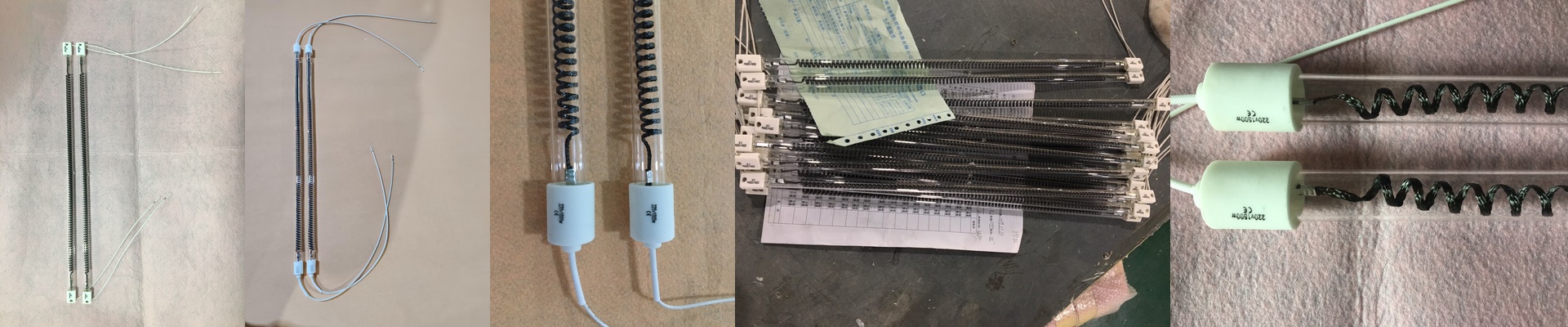
You can’t just blast the parts with heat and hope for the best. That’s a recipe for disaster. Instead, we use a stepped ramp-up. First, we start with some low-intensity IR just to get the part stabilized. Then, we hit a plateau—an evacuation phase. This gives the moisture and solvents time to get out without boiling over. Finally, we crank it up with high-density IR to lock everything in. We use quartz-halogen tubes because they’re incredibly snappy. They can go from zero to full power in milliseconds. It stops that annoying “overshoot” that usually causes the surface to crack.
The reality check
Now, here’s the catch. High-density IR is great for keeping a high-volume line moving, but it’s a power hog. You’ve got to make sure your transformers and cabling can handle that initial surge of current, or you’ll be tripping breakers all day. And a word of warning: these lamps are picky. If a bit of oil or dust gets on the quartz, it creates a hot spot. The tube will burn out way faster than it should. Keep your shielding spotless, and you’ll save yourself a lot of unplanned downtime.