


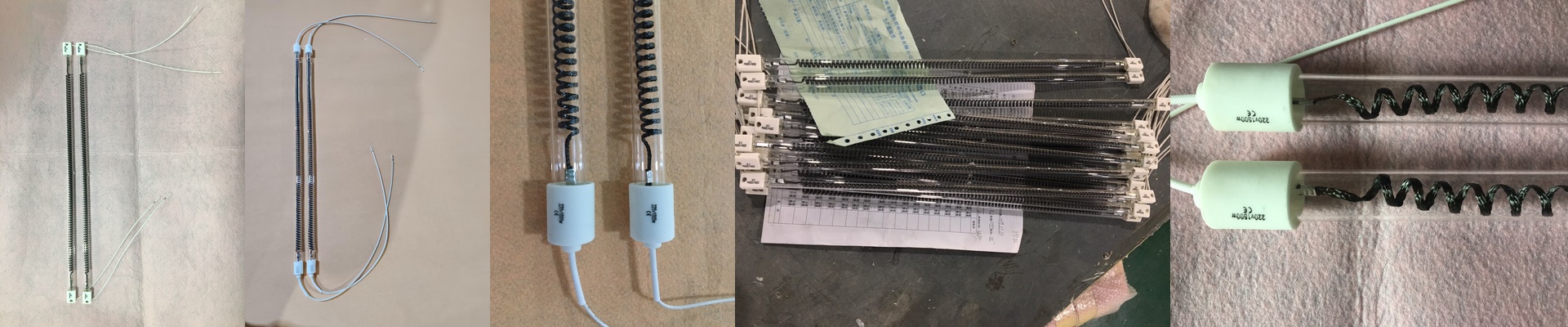

Getting Your IR Emitters Right for Different Brake Pads
Here is the thing about drying brake pads: you can’t just set it and forget it. If you try to run ceramic pads through the same IR setup you use for semi-metallics, you’re asking for trouble. You’ll either end up with pads that aren’t cured all the way through or, worse, surface scorching that ruins the batch. It all comes down to how the material actually “takes” the heat.
Picking the Right Wavelength
Ceramic and semi-metallic pads are different beasts. Ceramics are dense. To get the heat deep into that matrix without frying the surface, you need a specific wavelength. Then you’ve got semi-metallics with all those steel and copper fibers. They handle heat differently. That’s why we spend time picking the right emitter—short-wave or medium-wave—to match the material. If you get this wrong, you hit the “skin effect.” That’s when the outside feels bone-dry to the touch, but the core is still damp. Not a great look.
It’s Not Just About Raw Power
Some people think the answer is just to crank up the wattage. It isn’t. We look at your line speed and the actual mass of the pad to figure out the heat flux. Sure, a high-density halogen tube gets you up to temp fast, which is great for quick cycles. But it’s hard on your reflectors. If those reflectors aren’t polished to a mirror finish, you’re just heating up the oven walls instead of the pads. Total waste of energy.
The Real-World Trade-off
Faster throughput sounds great, but it means your margin for error shrinks. If your conveyor drifts by just a few seconds, you’ve gone from “perfectly cured” to “overheated” real quick. To stop that from happening, we suggest using closed-loop PID controllers. They modulate the power on the fly, so your temps stay steady even when the shop floor gets freezing in the winter or sweltering in the summer. Just make sure you’re using heavy-duty cabling. You don’t want voltage drops killing your efficiency because the wires are too thin for the current draw.