



Keeping Your Brake Pad Curing Lines Steady 24/7
In a brake pad production line, thermal drift is a nightmare. If you’re running a curing oven around the clock, even a tiny 2% dip in infrared output can ruin everything. You end up with uneven curing, a bunch of scrapped batches, and a massive headache. That’s why we build our IR modules the way we do. We’re obsessed with stopping those power fluctuations before they start.
The Secret to Steady Power
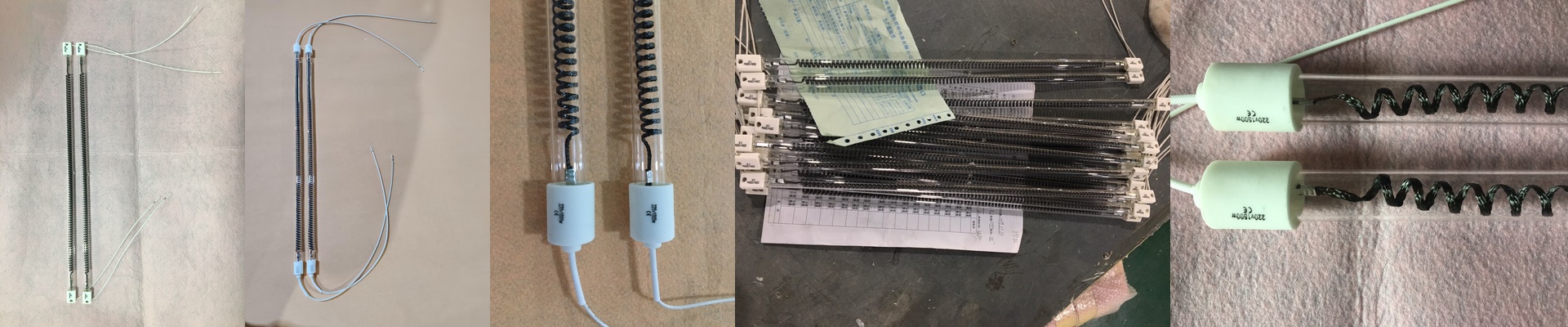
To get rid of that volatility, we look at two things: the filament and the voltage. Standard lamps usually flicker or wear out because the tungsten filament thins out unevenly. It’s a common problem. We handle this by using high-density quartz envelopes and precise halogen cycles. Essentially, this pushes the tungsten back onto the filament, keeping the electrical resistance steady. But the lamp is only half the battle. You’ve got to pair it with a stabilized power supply. If your line voltage jumps around, your heat output will too. We build our modules to handle constant, heavy loads without frying the terminals.
Built for the Grime
Let’s be honest: brake pad lines are dusty, abrasive, and generally pretty harsh places to work. We don’t use fragile lab bulbs here. We use reinforced quartz tubing that can handle thermal shock and take a beating in a real factory setting. We also put a lot of effort into the connectors. Loose connections lead to arcing, which creates heat and burns out the lamp ends. By tightening the tolerances on the mounting brackets, we make sure the lamp stays perfectly centered in the reflector. That means more heat actually hits the pad surface instead of wasting away.
The Trade-off
Here’s the catch: high heat density comes with a price. To get the rapid curing speeds you need for high-volume lines, we push the wattage high. Because of that, your cooling fans and ventilation have to be up to the task. If the module housing gets too hot, your lamp life is going to drop. Keep your airflow consistent, and you’ll keep that 24/7 cycle humming along.