


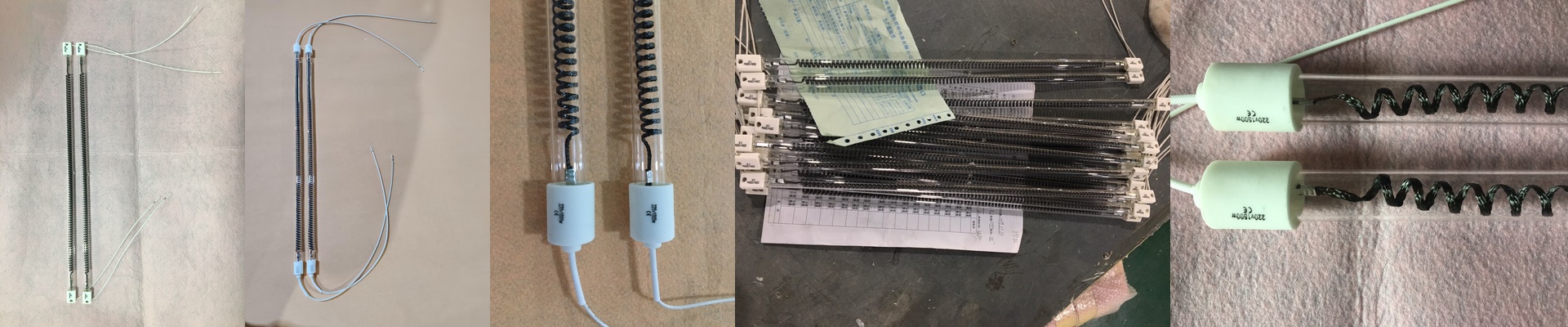

Keeping the Heat Steady in Brake Pad Curing
If you’re running a brake pad line 24/7, you know the nightmare of a bad curing cycle. One tiny dip or spike in your IR output and suddenly your resin isn’t polymerizing right. The result? Warped pads and a pile of rejected parts that should’ve been out the door. It’s frustrating, and it’s expensive. That’s why we build our short-wave IR modules the way we do. We’re focused on killing that power drift before it kills your yield.
The Secret to Stable Power
Here’s the thing: you can’t just toss any old lamp into a high-wattage system and hope for the best. To get that heat deep into the friction material without the power jumping all over the place, every single tube has to be a perfect match. We’re talking about identical resistance. If one tube decides to pull more current than its neighbor, it’s going to burn out way too fast. It’s a domino effect you just don’t want. We use heavy-duty quartz envelopes because the thermal stress is brutal. But remember, high heat density puts a massive strain on your power supply. Make sure your transformers are beefy enough to handle that initial inrush of current. Otherwise, you’ll see flickering, and flickering means inconsistency.
Built for the Real World
Factories are noisy, shaky places. We use reinforced connectors so your lamps don’t just vibrate loose while the conveyor is humming along. We stick with the short-wave spectrum because it’s efficient. It puts the energy exactly where it needs to go—into the curing agents—instead of just heating up the air in the room. Now, let’s be honest. These aren’t magic; they aren’t maintenance-free. Quartz tubes eventually wear out. That’s why we designed these as drop-in replacements. When a tube finally goes, you can swap it out in a couple of minutes. No need to rewire the whole rack or spend half your shift cursing at a manual.
Watch Your Cooling
There is a trade-off, though. When you’re pushing this much IR output, you’re creating a lot of waste heat. The pads get the energy, but the housing takes the hit. If your cooling blowers are too small, your housing will bake. And when the housing overheats, your lamp life plummets. It’s a simple balance: get your airflow right, or you’ll be spending your weekends replacing tubes every few weeks.